


Imagine this: you’ve launched a website, invested tons of time and effort into quality content, technical setup, and on-page optimization. A whole year has passed, yet organic traffic is still at zero. Search rankings are stuck in place, visitors aren’t coming, and the business is at a standstill. Sound familiar? It’s in moments like these that it becomes clear: good content alone isn’t enough. Search engines today look not only inside your website but also at how other authoritative resources “vote” for you with natural external recommendations.
In this article, we’ll explain what outreach is, how it helps build those very recommendations, and why it’s through outreach that link building becomes a true engine of growth. We’ll talk about who needs it, how to choose donor sites correctly, which tools to use, and how to launch everything yourself – with detailed checklists you can try applying today.
What Is Outreach and Why You Need It
Outreach is when you personally reach out to owners of other websites, bloggers, editors, or experts and offer useful, interesting content in exchange for a mention or a backlink. It’s not mass mailing and not buying links – it’s building mutually beneficial relationships.
In the world of search engine optimization (SEO), this kind of link work is common practice: it’s handled by dedicated link builders or SEO specialists. Outreach in SEO is an approach where SEO specialists earn links through personal communication and agreements, carefully considering where to get placed and which anchors to use so the links look natural and deliver results for the client.
You provide value – updating an old article, replacing a broken link, a guest post, or a fresh case study – and in return you get a natural recommendation that search engines treat as a trust signal. That’s exactly why building links through personal contacts works where automated methods stopped delivering results long ago.
Why Link Building Through Outreach Has Become Critically Important Right Now
In 2025–2026, Google’s algorithms evaluate E-E-A-T – Experience, Expertise, Authoritativeness, and Trustworthiness – even more strictly. One or two strong links from relevant resources can completely turn your keyword rankings around, while hundreds of links from weak sources only cause harm.
In practice, well-executed link promotion delivers several effects at once:
- Your domain authority and search engine trust grow.
- Targeted traffic arrives from an already interested audience.
- You gain resilience to algorithm updates.
- Long-term partnerships form, which later bring not only links but also joint projects.
Unfortunately, without this, even the best content or website risks staying “in the shadows.” That’s why SEO specialists increasingly say: modern link building is not an optional tactic but a mandatory foundation for anyone who wants real growth. Today Google is excellent at recognizing artificial patterns and grouping similar links, so 100 identical links may count as just one signal. It’s not quantity that wins – it’s the quality of the placement context.
Who Definitely Needs Outreach and What Problems It Solves
Let’s be honest: every website needs link building. But this approach is especially helpful in the following situations:
- The website is young and needs to quickly gain weight in the eyes of search engines and get out of the “sandbox.”
- The niche is highly competitive – services, e-commerce stores, info products, or B2B.
- The content is already there, but organic traffic isn’t growing.
- You want not only rankings but also referral traffic plus partnerships.
A webmaster relations specialist (link builder) today solves a whole set of tasks: accelerating authority growth, expanding the audience, and turning static content into a working customer acquisition channel.
The Main Outreach Campaign Formats That Deliver Results
There are truly many outreach methods in SEO, and the choice depends on your goals, budget, content type, and how much time you’re ready to invest. The key is not to grab everything at once but to start with 1-2 approaches that best fit your specific website.
Here are the most popular and effective practices that actually work today:
- Guest posting. You write a full informational article for an external website and place an active link to your resource in it. This is one of the most popular and effective methods: you fully control the text quality, link context, and topic. Bonus – the article often brings additional traffic and keeps working for a long time.
- Link insertion into existing content (link insert). You find an already indexed article on someone else’s website and offer to add your link to it – for example, as a useful addition or a replacement for an outdated one. The method is fast because the page already has authority and traffic. It requires a careful approach and the editors’ consent, but results often come very quickly.
- Link exchange. Mutual linking between your website and a partner resource. Works great if the collaboration looks natural, is thematically justified, and doesn’t resemble an artificial exchange. The main advantage is long-term relationships. The downside – it’s harder to scale, and you need to choose partners very carefully to avoid search engine filters.
- Submissions (placing content on external platforms). Publishing information about your brand or website in company directories, aggregators, map services, and video and audio platforms. Great for strengthening your “background” link profile, improving local SEO, and expanding visibility. It shouldn’t be the core of your strategy, but as a supplement it’s very useful.
- Broken link building. Finding broken links on niche-relevant websites and offering your up-to-date page to replace the “dead” one. One of the most “white-hat” and highly effective methods, though it requires a significant time investment.
- Getting added to resource pages and expert round-ups. Asking to have your material added to “best guides on the topic” lists or round-up posts. The advantage – the link comes from an authoritative page where the target audience is already gathered.
How to Choose Donor Sites Correctly
This is one of the most important stages of the whole process. A poorly chosen donor not only won’t help but can actually hurt – for example, causing your rankings to drop or simply burning your budget with no result whatsoever.
Search engines today understand quite well where a link looks natural and where it doesn’t. If a website looks questionable or publishes anything and everything, such a link can work against you. So let’s break down what to pay attention to when choosing a link donor for your website.
- Topical relevance. The website should be from your niche or one as close to it as possible (thematic category). Only then does the link look natural and pass maximum “weight.”
- Authority and link profile strength. Look at Domain Rating (DR) or Domain Authority (DA) – ideally 50 and above. Pay attention to the number of referring domains: the more there are and the higher their quality, the better. Also be sure to review the number of outgoing links: if the site links out to anything and everything, it can reduce the value of the placement. (check via SimilarWeb or Ahrefs)
- Traffic and content quality. Real organic traffic of 500–1,000 visitors per month or more (check via SimilarWeb or Ahrefs). The website should be updated regularly, have useful content, and a minimal amount of spam.
- No connections to “grey” niches (a very important point that many people miss). Check whether the site publishes materials or links related to gambling, cryptocurrency, adult topics, or other questionable areas (unless you own such a site yourself). Such associations can seriously damage your authority. For a quick check, use this Google operator:
site:example.com “porn” OR “casino” OR “gambling” OR “lotteries” OR “poker” OR “cryptocurrency” OR “forex” OR “bitcoins” OR “cbd”
- Additional safety signals. Check the Spam Score (below 15), the Trust Flow to Citation Flow ratio, and the number of external links on the target page (the fewer there are, the higher the weight of yours). The main tool is Moz Link Explorer (moz.com/link-explorer). Free with limits. It’s also partially shown in Ahrefs.
Our advice: Many people still evaluate only the domain by DR/DA. But Google ranks pages, not domains – so be sure to check the specific category or page where your link will be placed.
Analyzing an Outreach Donor with Ahrefs
At our agency we mostly use Ahrefs, so we’ll demonstrate using this service. For a minimal overview, the free Ahrefs Website Checker https://ahrefs.com/website-authority-checker/ will do – you’ll at least be able to evaluate the DR, organic traffic, and number of referring domains.
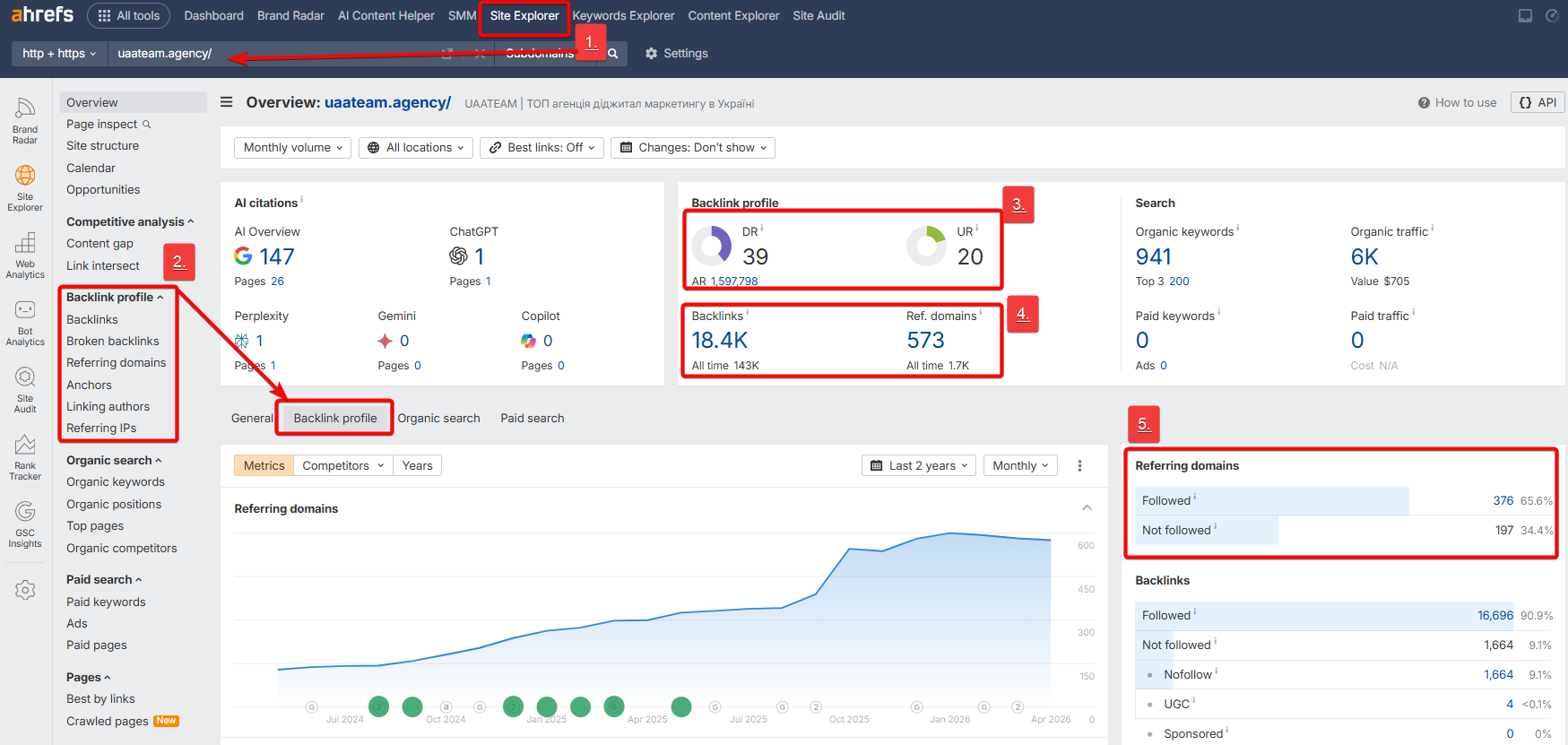
Here’s how to quickly analyze a donor in Ahrefs (using our website as an example):
- Go to the Site Explorer tab.
- Paste the donor site’s domain into the search bar.
- Go to the Backlink profile section in the left-hand menu.
- Immediately check the key metrics: Domain Rating (DR), the number of Backlinks, and Referring domains.
- In the Referring domains block, check the ratio of followed to not followed links.
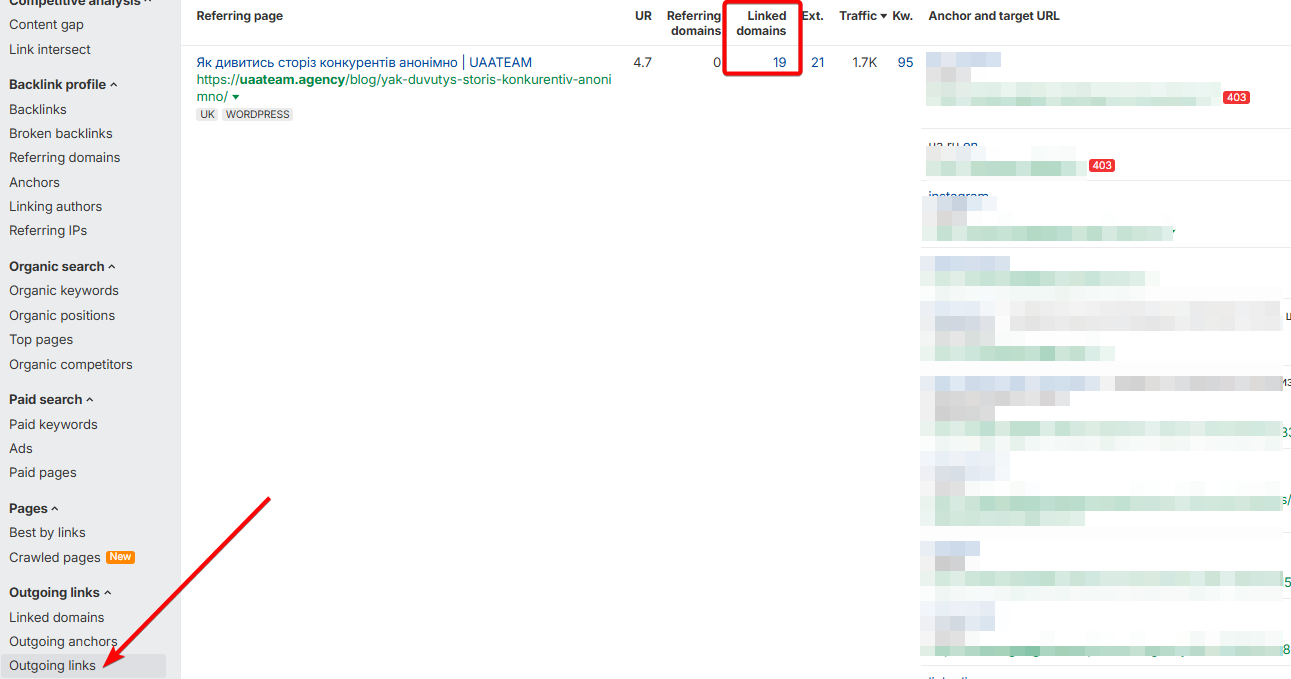
To check the number of external (outgoing) links on the target page, paste the full URL of that page (not just the domain).
In the left-hand menu, select Outgoing links – here you’ll immediately see the exact number of external links on the page. The fewer there are, the more weight your link will get.
Link Types: Dofollow and Nofollow
Now let’s talk about the fact that not all backlinks are equally useful for promoting your website. There are two main types:
- Dofollow links (the default) – they pass “link juice,” directly influence your domain’s authority, and help with rankings. These are exactly the links we aim to earn through outreach.
- Nofollow links – marked with the rel=”nofollow” attribute, they don’t pass weight. They don’t help your domain authority, but they’re still useful: they bring real traffic, increase brand awareness, and sometimes deliver an indirect effect (for example, through social signals or branded searches).
In outreach campaigns, always specify in your email that you want a dofollow link. Most serious platforms will accommodate you if your material is truly valuable.
Donor selection checklist:
- Does the topic match at least 80%?
- DR/DA ≥ 50?
- Steady growth of quality referring domains (at least 100–200, evaluated by the same criteria)
- Trust Flow and Citation Flow in a healthy ratio
- Spam Score below 15
- Real organic traffic above 500 visits per month with a positive growth trend
- No more outgoing links than incoming ones
- The website is updated at least once every 2–3 weeks
- No signs of spam (mass guest posts, ads in every paragraph)
If the answer is “yes” to seven or more points, the donor can be added to your database.
How to Track the Results of Outreach Campaigns
Once the links are acquired, it’s important to quickly understand whether they’re working. Here are the two most important and simplest ways to monitor them.
Checking Whether the Published Article or Page on the Donor Site Is Indexed
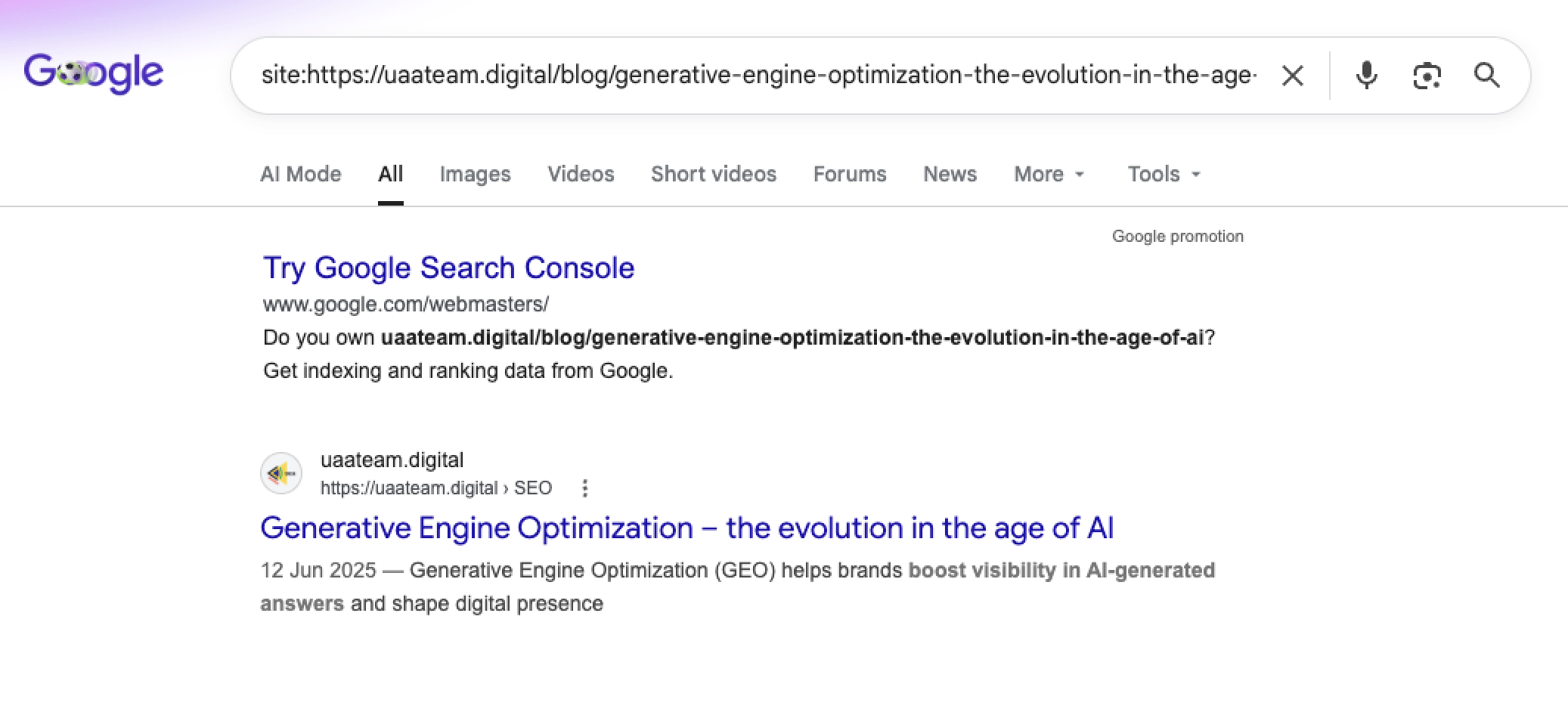
To make sure Google has already seen your article, enter this operator into the Google search bar:
site:donor-domain “the exact title of your article” or site: the link to your article
If the page appears in the search results, it’s indexed and ready to pass weight.
However, what matters is not just one-time indexing but stability: if the donor page periodically drops out of the search index, the signal becomes unreliable.
How to Check Referral Traffic in Google Analytics 4 (GA4)
To see whether live traffic is coming through your new outreach links:
- Go to GA4 → Reports → Acquisition → Traffic Acquisition.
- In the table, select the Session source / medium dimension.
- Find the donor’s domain in the list (for example, example.com / referral).
- If traffic has appeared, you’ll see the number of sessions, users, page views, and conversions.
- For convenience, apply a date filter (from the publication date) and a filter for the specific source.
These two steps will help you quickly understand whether the campaign is working and whether it’s worth scaling further.
Conclusions and Our Observations
The rules of the game have changed dramatically. Many used to believe: the more links, the faster the growth. Today Google is excellent at recognizing artificial patterns and grouping similar links. So 100 identical links from template websites, with identical anchors or a similar structure, may be counted by the system as just one signal.
The winner is not the one who accumulated the biggest mass of links, but the one who secured the best context. A single quality placement on a relevant, authoritative page often works more effectively than hundreds of weak, cookie-cutter ones.
Many people still evaluate only the domain by DR/DA. But Google ranks pages, not domains. Even a very strong website can have plenty of weak or irrelevant pages that pass almost nothing. That’s exactly why a placement on the homepage or on a well-ranking topical article almost always delivers a greater effect.
And one more important point: it’s not enough for a link to simply appear in the index once. The key to success is stability. If the donor page periodically drops out of the search index and comes back, the signal becomes unreliable and may simply be ignored during algorithm updates.
So real outreach results today depend on three key things:
- a strong and natural placement context,
- the quality and stability of the specific donor page,
- the diversity and relevance of your entire link profile.
Remember the main thing: promotion through external links is not a one-off action but a system that works for months and years. Start by selecting donors using the checklist and choosing the right outreach marketing method, launch your first small campaign, and watch how the picture changes.
If all of this seems complicated, or you don’t have the time and the necessary tools for deep analysis and campaign launches, it’s the right time to turn to specialized link builders. Our SEO specialists professionally handle link building and help websites earn quality outreach links, steady authority growth, and organic traffic.
 21|
21|
 0
0

Comments 0
Relevant articles
Relevant articles
ARE YOU READY TO IMPROVE YOUR PROJECT WITH #UAATEAM?
We will be happy to discuss your project, along with your main goals and objectives. You can schedule a meeting with one of our managers.
Open->
to new