


Two or three years ago, most companies measured website performance by a straightforward set of metrics: Google rankings, organic traffic, and the number of leads. If the numbers were growing, things were moving in the right direction.
Today, website owners are noticing a different picture. A company holds strong search positions, publishes content regularly, but when someone searches via ChatGPT or similar services, the brand barely comes up. It feels like the website exists in two separate realities: visible in Google, invisible in the new search platforms.
What’s happening? Your site needs AI optimization — and before that, a proper audit.
What Is an AI Site Audit
Unlike a classic SEO audit that focuses on rankings and traffic, an AI audit evaluates how clearly a website communicates to artificial intelligence systems. That’s why the review often goes beyond technical parameters and covers content, expertise, brand reputation, and its presence in the broader information landscape.
The problems can vary. After a site redesign, some pages may have quietly dropped out of the index. Sometimes critical information is buried so deep that users only find it after a long search. And sometimes the issue has nothing to do with the site itself — the company has a solid website but is barely mentioned anywhere else online.
Because of this, many businesses spend months making changes that don’t move the needle. An audit pinpoints the bottleneck before you invest in large-scale improvements.
Checking Technical Accessibility
Website owners often assume the technical side is fine. Pages load, forms work, no visible errors. But an audit regularly uncovers things that have been hiding in plain sight for years.
First, verify that your key pages are actually being indexed. After a redesign, structural changes, or a site migration, sections can accidentally fall out of indexation. Externally they look normal, but they’ve effectively stopped participating in search.
Technical files that govern how search crawlers behave need a separate check. The robots.txt may contain outdated restrictions, and sitemap.xml might not have been updated in a long time and no longer reflects the real structure of the site. As a result, search engines get an incomplete picture.
There’s also the question of crawler accessibility. Some content may be hidden inside complex interactive elements or loaded via scripts. A person sees it without any issue, but search and AI services don’t always process it the same way.
The audit also looks at duplicate pages, canonical tags, and other technical settings. If the same content is available at multiple URLs, search engines may interpret differently which version is the authoritative one.
Website Content Audit
Much of the content written a few years ago was created with classic SEO logic in mind: cover the topic broadly, include keywords, capture rankings. For today’s search platforms, that’s no longer enough.
Think of two articles on the same subject. The first has a lot of text but buries the answer at the very end. The second delivers the key information in the opening paragraphs, then digs deeper from there. The second approach is what gets traction in AI search today.
When reviewing content, look at each page through the eyes of someone searching for a specific answer. Does the page actually satisfy the user’s query? Are there clear, direct answers to the main questions? Is the reader forced to dig through secondary information to find what they need?
Tables, comparisons, and lists help readers find data faster. When information is well-organized, it’s easier to process — for people and for search services alike.
Many sites have articles that still attract visitors even though the underlying data is outdated. During the audit — especially when optimizing for ChatGPT — it’s worth checking facts, statistics, dates, research references, and examples.
Another important factor is original expertise. Content that reflects real company experience, project outcomes, specialist commentary, or firsthand observations is far more compelling than a generic rewrite of publicly available information. This type of content is what most consistently drives visibility in AI search.
Trust and Reputation Check
Technical soundness and good content still aren’t enough on their own. Search services need to understand who stands behind the site and whether the information published there can be trusted.
The mere fact that a brand is mentioned online tells you very little. Make sure the site includes basic information about the company, content authors, case studies, testimonials, or contact details. A privacy policy, business details, terms of use, and other official information also play a role in establishing site credibility.
It’s also worth reviewing structured data. It helps search systems correctly interpret information about the company, authors, products, and services.
Another critical dimension is external brand presence. When industry media, sector portals, or expert platforms mention your company, they create additional trust signals that reinforce the site’s authority.
This stage often makes it clear why two sites of similar quality can end up with very different levels of visibility. One brand is actively present in the information landscape; the other exists only within its own domain.
How to Check Your Brand’s Real Visibility
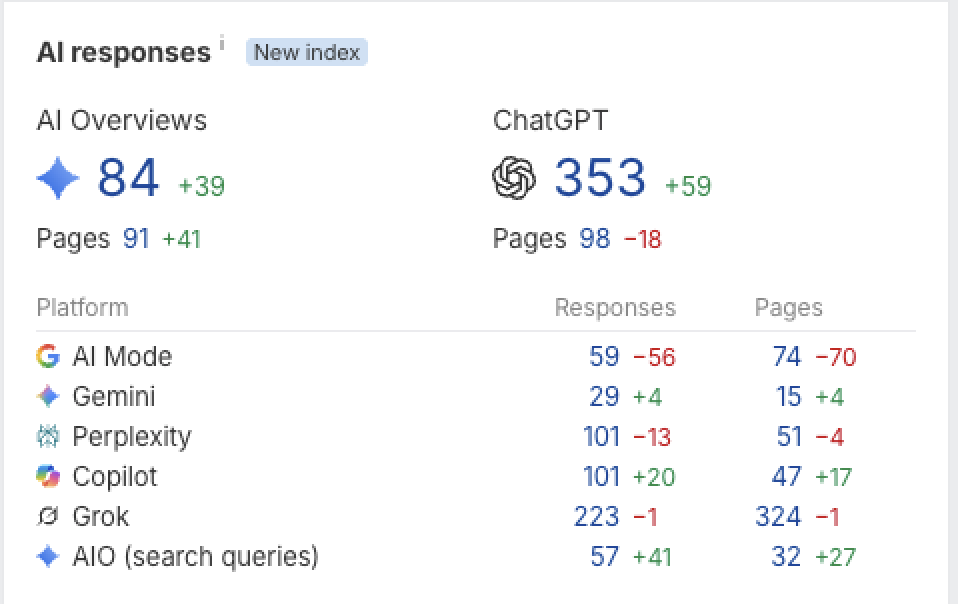
After analyzing the site itself, it’s worth stepping back and looking at things from the outside: does the company even get mentioned in modern search services, and what sources do those services rely on when generating answers?
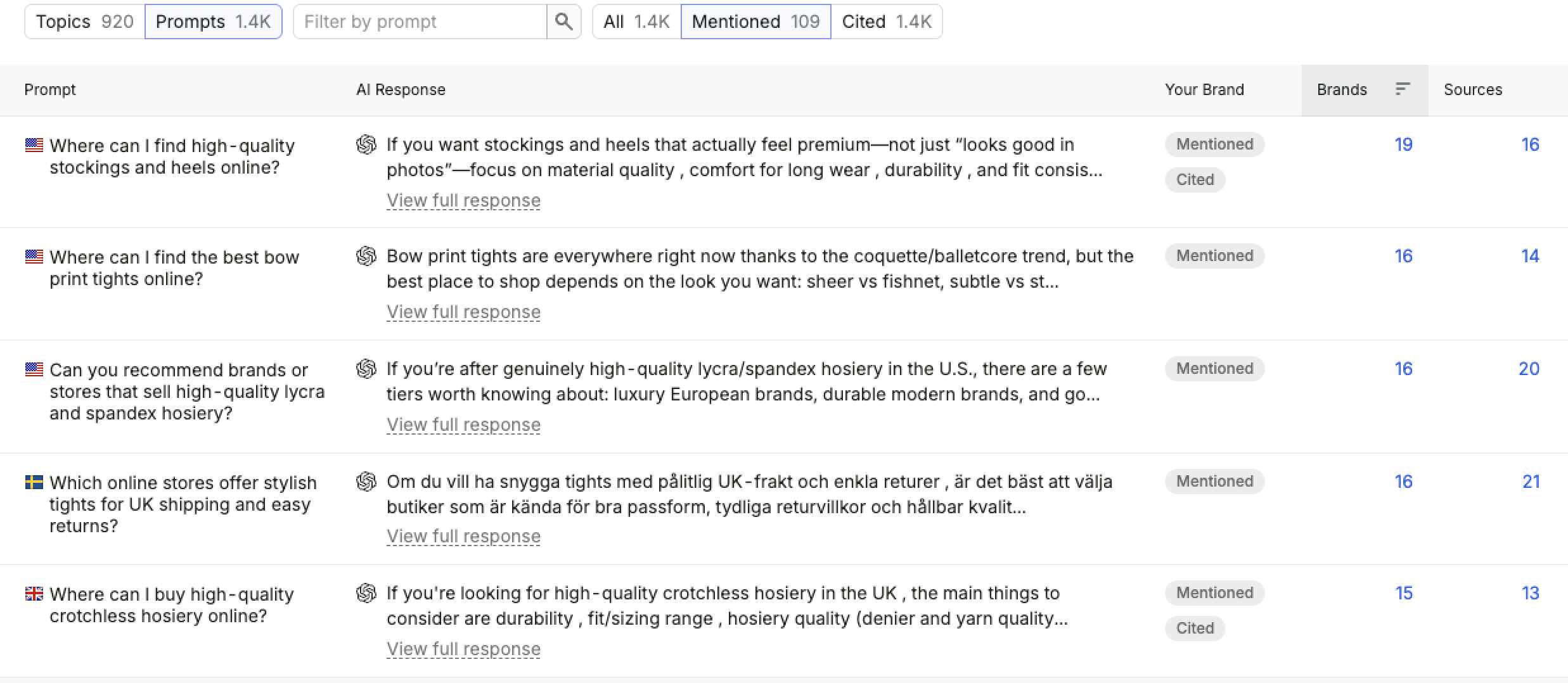
To analyze visibility in AI systems, start with a simple list of queries: the company name, core services, products, and a handful of topic-based searches where the business wants to be discoverable by potential clients.
Then run those queries through AI services. What matters isn’t just whether the brand is mentioned. It’s far more useful to see which sites are being used as sources, which companies appear alongside yours, and who is actually shaping the information landscape in your niche.
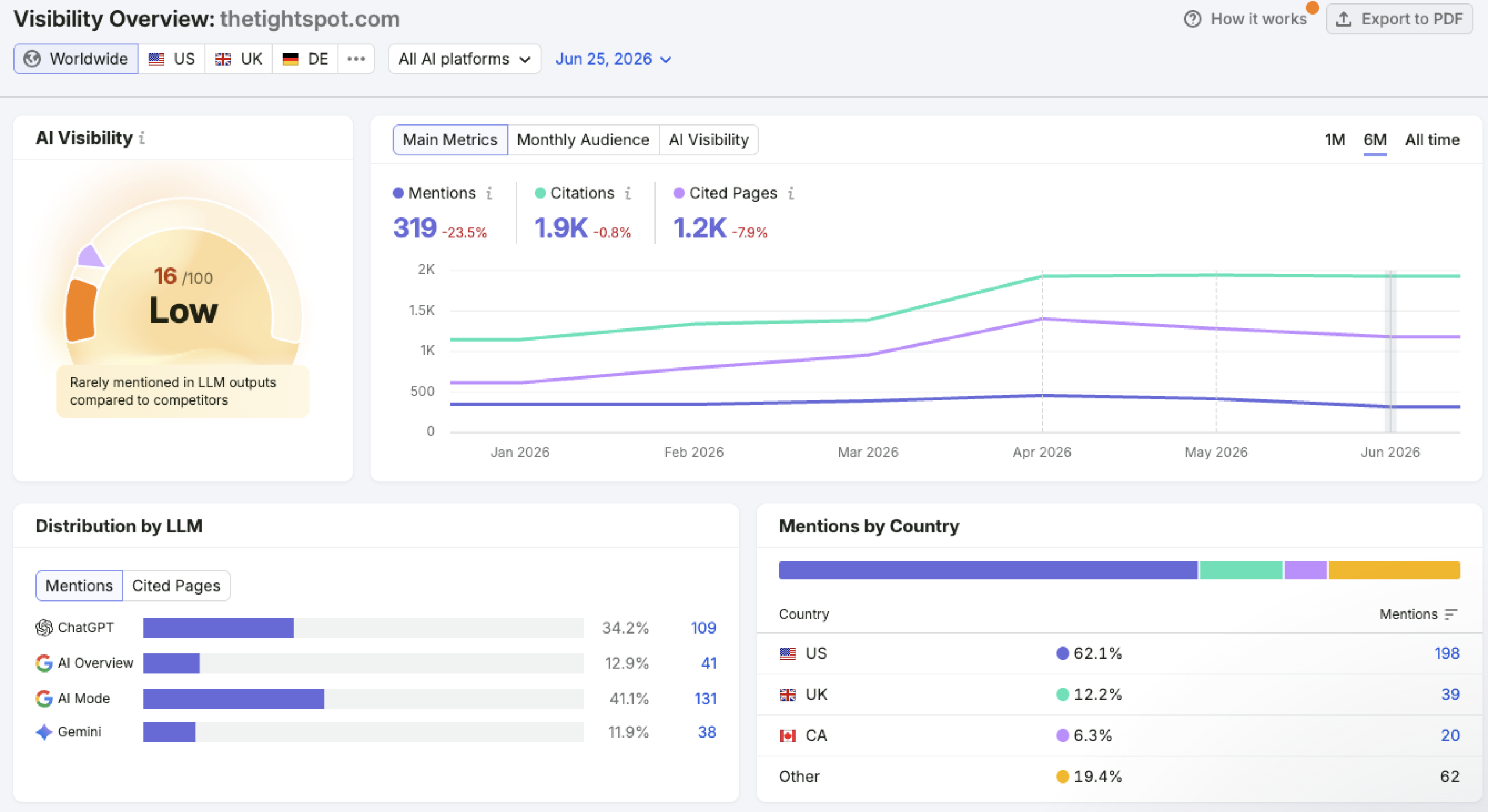
These checks often produce surprises. A company may have consistent organic traffic from Google but almost no presence in AI-generated answers. The reverse also happens: a brand gets mentioned regularly thanks to strong reputation and external publications, even without high keyword rankings.
During the analysis, document all brand mentions, source sites, and the resources the system treats as authoritative. This clarifies who you’re actually competing with for audience attention.
To track the results of GEO optimization over time, set up referral tracking in Google Analytics 4. This lets you see the share of visitors arriving from next-generation search platforms and measure how brand visibility shifts after implementing your recommendations.
What to do After the Audit: Optimizing for AI Search
Many people expect a long list of errors and dozens of pages of recommendations on how to appear in ChatGPT answers. But after the audit, the picture becomes clear: which changes are likely to have an impact in the near term and deserve priority, and which ones don’t matter much right now.
Technical issues come first. If important pages aren’t indexed, are inaccessible to crawlers, or contain critical errors, other improvements may not produce the expected results.
The next step depends on the state of your content. In some cases, updating older material is enough. In others, the page structure needs simplifying or the way information is presented needs rethinking. Audits also regularly surface topic gaps — subjects the site simply isn’t covering.
Trust signals deserve separate attention. Many sites are missing author information, case studies, testimonials, or company overview pages. Sometimes the core problem turns out to be an absence of expert content: the company talks extensively about its services but rarely shares its own experience and perspective.
Once changes are implemented, define the metrics you’ll use to measure results. The typical ones to track: page indexation, new brand mentions, organic traffic, referrals from next-generation search platforms, and visibility trends across key topics.
Conclusion
A good website today means more than just technical soundness and well-structured pages. What matters equally is how clearly a company explains its services, how consistently it updates its content, and whether it’s present in the professional information ecosystem.
That’s why an audit is best thought of not as a one-time check, but as a way to see your site from a new angle. It frequently surfaces issues the website owner never suspected were there.
The Ai website audit covers:
- indexation and technical accessibility of pages;
- content quality and freshness;
- expertise and trust signals;
- brand mentions across external platforms;
- current visibility in modern AI search services;
- pages and topics that need improvement.
After the review, it becomes clear which changes to prioritize and where they’re most likely to make a difference.
 35|
35|
 0
0

Comments 0
Relevant articles
Relevant articles
ARE YOU READY TO IMPROVE YOUR PROJECT WITH #UAATEAM?
We will be happy to discuss your project, along with your main goals and objectives. You can schedule a meeting with one of our managers.
Open->
to new